



BN(O) Child Settlement Rules 2026: Can Children Get ILR Before Five Years?
In Brief
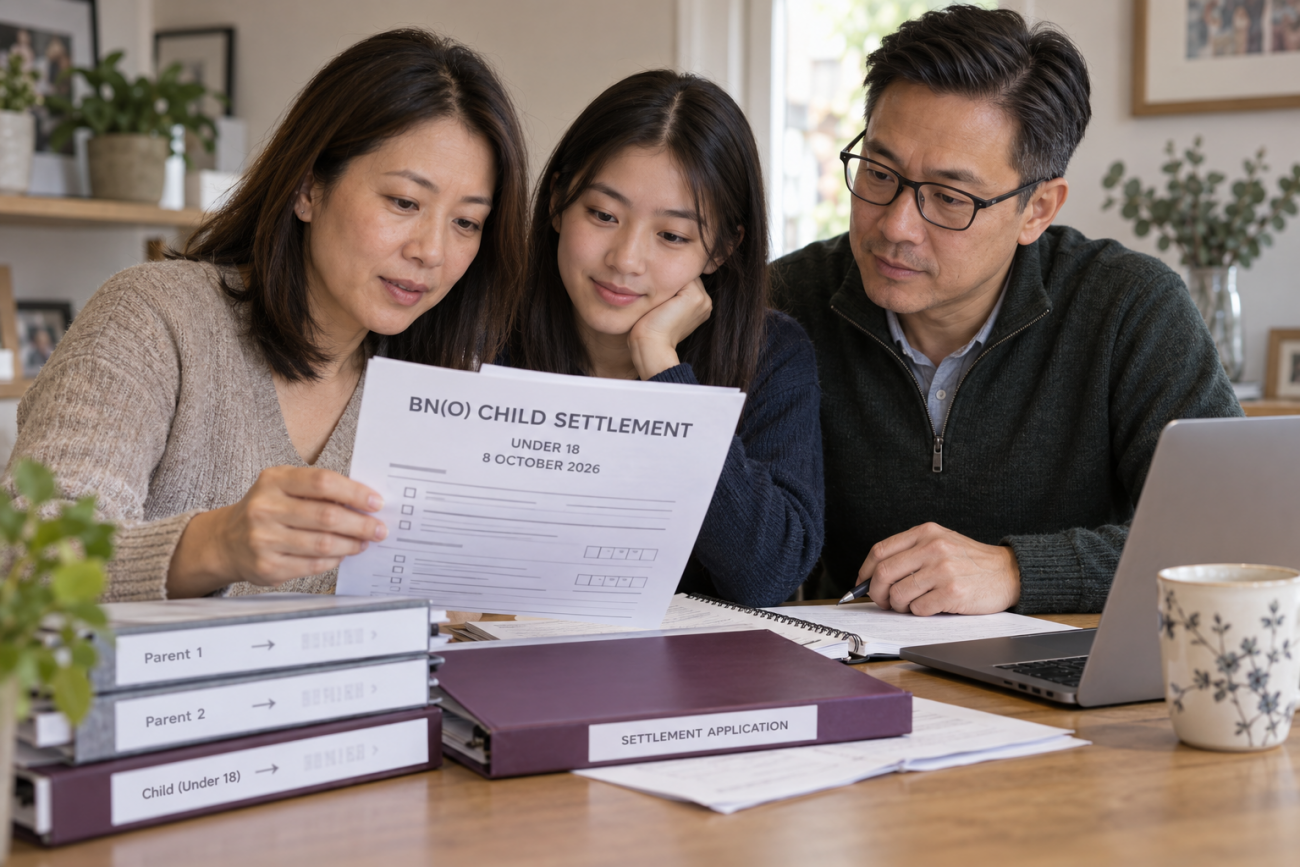
For BN(O) families planning settlement, the practical consequence of the change is that, from 8 October 2026, a child under 18 on the application date will not have to complete their own five-year qualifying period. This may allow an eligible dependent child to obtain indefinite leave to remain with qualifying parents even if the child joined the UK later, was born after the family arrived or received BN(O) permission later.
For parents, the key limitation is that the amendment removes only the under-18 applicant’s five-year residence requirement. A shorter residence period will not cure missing BN(O) permission history or disapply the rules concerning the parents’ settlement position, the other parent, care arrangements, validity and suitability. Our Immigration Solicitors can review the intended application date, route history and evidence for each family member before linked applications are submitted.
Until the end of 7 October 2026, the existing five-year rule continues to apply to every BN(O) settlement applicant. Families should not assume that an application submitted before 8 October will receive the exemption merely because it remains undecided after commencement. Timing is particularly important for a child aged 17 because the amended wording assesses age on the application date.
What Changes on 8 October 2026?
For families preparing now, the first timing question is whether the amended rule has actually commenced. The Statement of Changes HC 584 was laid by the Home Office on 3 September 2026, but APP HK1 is not due to replace HK 62.1 until 8 October 2026. As at 14 September 2026, the amendment is confirmed future law rather than a rule already available to applicants.
Until commencement, a child’s shorter residence remains a legal barrier even where both parents are ready to settle. Existing HK 62.1 requires five years’ continuous residence in the UK with permission on a route leading to settlement, and the applicant’s most recent permission must be on the Hong Kong BN(O) route. A child cannot meet that rule by relying on a parent’s completed qualifying period.
After commencement, that residence obstacle falls away only for an applicant who is under 18 on the application date. The requirement for the applicant’s most recent permission to have been on the BN(O) route will remain. For a later-arriving child, this may permit settlement alongside qualifying parents without waiting for the child’s own five-year anniversary.
What should not be overlooked is the amendment’s limited reach. It will not waive five years for parents, partners or applicants aged 18 or over, nor will it make every child or grandchild connected to a BN(O) status holder eligible. Age, immigration category, permission history and family circumstances still determine whether the remaining requirements are met.
Which BN(O) Children Can Use the Exemption?
A few days can change the result for a child approaching 18 because the amended rule fixes age at the date of a valid settlement application. An applicant who applies at 17 can benefit, subject to the other requirements. The same person applying after their 18th birthday cannot use the exemption, even if they originally entered or received permission as a dependent child.
Age alone is not enough. HK 57 requires an applicant applying while under 18 to have last been granted permission as a dependent child on the Hong Kong BN(O) route. The applicant may be connected to a BN(O) Status Holder or be the dependent child of a BN(O) Adult Child, but the family relationship does not prove the immigration category. Grant records and the eVisa should therefore be checked before relying on the exemption.
| Applicant’s position | Five-year requirement from 8 October 2026 | Main further checks |
| Under 18 on the application date and last granted BN(O) dependent-child permission | Exempt from the five-year qualifying period | Parent settlement, other-parent rule, care, validity, suitability and BN(O) permission history |
| Aged 17 when a valid application is submitted but turns 18 while it is pending | Exempt because age is assessed on the application date | Application validity and compliance with every remaining requirement |
| Aged 18 or over after previously holding dependent-child permission | Five-year qualifying period required | Adult-child application category, qualifying residence and current filing process |
| BN(O) Status Holder, dependent partner, BN(O) Adult Child or adult dependent relative | Five-year qualifying period required | Qualifying routes, continuous residence and individual settlement requirements |
| Under 18 without the required BN(O) dependent-child permission history | The exemption alone is insufficient | Permission history, relationship requirements and the correct immigration route |
The table is a screening tool rather than a substitute for individual analysis. Children in the same household may have different outcomes because their ages, grant dates or immigration categories differ. Coordinating a family filing can help satisfy linked parent requirements, but each child’s route history and eligibility must still be tested separately.
Can a Child Settle If They Joined the UK Later?
For many families, later entry is the practical problem APP HK1 addresses. A parent may have arrived soon after the route opened while a child entered months or years later. Until the amendment commences, that shorter residence can prevent the child from settling even when the parents have completed five years.
Once the amendment is in force, an eligible child who remains under 18 may settle with qualifying parents without waiting for their own five-year anniversary. This can assist where a child arrived later or family members received permission on different dates. In other words, the child need not remain on temporary permission solely because their residence clock began later.
Different permission-expiry dates can nevertheless complicate the sequence. The family may need to consider whether the parents will be ready to settle before the child’s permission expires and whether a child approaching 18 can apply within the available window. The safer approach is to create one family timeline while testing eligibility person by person.
A UK birth certificate does not, by itself, resolve the child’s nationality or immigration position. A child born in the UK is not automatically British and does not automatically hold BN(O) permission or settlement. If the child is not already British, the family should establish whether BN(O) permission was obtained and whether the required dependent-child history exists. The residence exemption cannot replace missing route eligibility.
What If the Child Is Approaching Their 18th Birthday?
Perhaps most critically, amended HK 62.1 uses an application-date age test. A child under 18 when a valid application is submitted can benefit even if they turn 18 while it is pending. By contrast, an applicant already aged 18 when applying remains subject to the five-year qualifying-period requirement.
That does not mean a family should submit an incomplete or premature application merely to obtain an earlier timestamp. The parents must be in the required settlement position, the child must have the correct permission history and the remaining requirements must be met. An invalid application may not secure the intended age position, while inadequate evidence can lead to expense, delay or refusal.
Once a person has turned 18 after receiving permission as a child, a further category distinction arises. Current caseworker guidance says that the person should apply as a BN(O) Adult Child at settlement. Under APP HK1 as laid, the five-year requirement still applies because the applicant is 18 or over. The live process and updated guidance should be checked before filing.
Where commencement and the child’s birthday are close, our Personal Immigration Lawyers can calculate the relevant dates and assess whether the family will genuinely be ready. The issue is not simply whether a form can be filed before a birthday: the application must be valid, the family requirements must align and the evidence must establish each applicant’s position.
Must Both Parents Be Settled?
Under HK 57, at least one parent must be granted settlement on the Hong Kong BN(O) route at the same time as the child, or already be settled or British. A child therefore cannot settle merely because one parent has completed five years if that parent is not being granted settlement and is not already settled or British.
In most families, the other parent must also be granted settlement at the same time, already be settled or be British. The Rules recognise exceptions where the first parent is the sole surviving parent, has sole responsibility for the child’s upbringing or where serious and compelling reasons support settlement.
Separation does not itself establish sole responsibility or satisfy the other-parent exception. The legal focus is on who makes the important decisions about the child’s upbringing, meaning that financial support, separate households or the child mainly living with one parent may not be enough. Families relying on serious and compelling reasons face a similarly fact-sensitive assessment and should identify the precise evidence supporting the claimed exception.
That evidential distinction matters because an exception must be proved rather than asserted. Relevant material may include court orders, records showing who makes educational or medical decisions, care arrangements, communications, medical evidence or proof that a parent has died. Evidence should address the applicable rule rather than present an unfocused family history.
What Other Settlement Requirements Still Apply?
Removing the child’s five-year period does not remove the wider framework in Appendix Hong Kong British National (Overseas). Each applicant must use the specified process, satisfy validity requirements, provide identity information and biometrics where required, and be in the UK. The applicant must have, or last have had, BN(O)-route permission and satisfy Part Suitability.
For parents preparing a child’s application, the care requirement is separate from residence. Suitable care and accommodation arrangements must exist under Appendix Children, and evidence may need to identify the parents and explain the child’s place within the family’s BN(O) route. Birth or adoption documents, court orders and immigration records may be relevant.
A birthday can also change which language and knowledge requirements apply. Under the Rules checked on 14 September 2026, an applicant under 18 is exempt from the English-language requirement, while HK 61.1 applies the Knowledge of Life in the UK requirement only to applicants aged 18 or over and under 65. The live Rules should still be checked before submission.
Even where filing is coordinated, each person needs an individual application, fee and eligibility assessment. Coordination may be necessary to meet the parent-settlement provisions, but it does not create one household application. A difficulty with one applicant’s residence, route history, suitability or evidence will not necessarily affect every family member in the same way.
The exemption changes only the child’s residence analysis. Parents and other non-exempt applicants must calculate their five-year periods separately, identify any earlier permission on a route leading to settlement and review absences under Appendix Continuous Residence. The relevant parent must also be eligible for settlement, already settled or British.
Should a Family Apply Before 8 October 2026?
The filing date carries legal consequences because APP HK1 does not take effect until 8 October 2026. Before that date, existing HK 62.1 requires five years’ qualifying residence from every applicant. HC 584 does not expressly state that an under-18 application submitted earlier will receive the exemption merely because it is decided after commencement.
For that reason, a family relying on the exemption should not assume that an earlier application will be assessed under the amended rule. Unless official transitional instructions establish otherwise, the safer course is generally to submit on or after 8 October once eligibility has been checked. That position must be reconsidered if further official instructions are published.
The operational position also matters. As at 14 September 2026, the published BN(O) caseworker guidance remains version 14.0, dated 8 April 2026, and does not incorporate APP HK1. Families should check the live Rules, guidance and process at commencement. Updated guidance may clarify how HK 63.1 operates for a child exempt from the period in HK 62.1.
Even so, preparation can begin before the new rule starts. Parents’ residence and absences can be reviewed, grant records collected and evidence addressing the other-parent requirement organised. Where a child is close to 18, early preparation reduces the risk of discovering a missing document or parental eligibility problem after the filing window opens.
What Happens If the Settlement Requirements Are Not Met?
A possible variation to further permission should not be treated as permission to file prematurely. HK 64.1A provides that, where settlement requirements are not met but the decision maker believes the applicant is likely to meet the relevant permission-to-stay requirements, the application will be varied to one for further permission on the applicable BN(O) route. This is a caseworking assessment, not a guaranteed fallback.
If variation occurs, no additional permission-to-stay application fee is required, but the settlement fee is not refunded and an Immigration Health Charge may be requested. If neither settlement nor further permission is granted, administrative review may be available for an eligible caseworking error. Each decision letter and review deadline should be checked promptly.
Does BN(O) Settlement Automatically Make a Child British?
The important distinction is that settlement and British citizenship are separate statuses. Indefinite leave to remain does not automatically make a child British. The next step depends on where and when the child was born, their age, each parent’s nationality and status, and whether registration is an entitlement or requires discretion.
For example, a UK-born child whose parent later becomes settled may become entitled to apply for registration while under 18, subject to the statutory requirements. A child born outside the UK has a different position. Once settlement eligibility is clear, OTS Solicitors’ British Citizenship and Nationality team can assess the child’s separate position.
Practical Checklist for BN(O) Family Settlement
The safest preparation begins with one family timeline recording dates of birth, UK arrival dates, immigration grants, relevant absences and proposed settlement dates. That timeline should then be tested against the Rules for each person. A parent’s eligibility may be necessary for the child’s application, but it does not prove that the child satisfies every remaining requirement.
- Confirm every applicant’s date of birth and age on the intended submission date.
- Obtain passports, grant letters, eVisa records and earlier application records where available.
- Identify the precise BN(O) category and most recent permission held by each family member.
- Check that an applicant applying while under 18 was last granted permission as a dependent child.
- Calculate each adult applicant’s five-year period and review qualifying routes and absences.
- Establish which parent will settle with the child and how the other-parent requirement is met.
- Gather proportionate evidence for sole responsibility, bereavement or serious and compelling reasons where relevant.
- Check care arrangements and every applicant’s validity and suitability position.
- Verify the live form, fee, identity process, Immigration Rules and guidance on the submission date.
- Preserve application confirmations and timestamps where the child’s age is decisive.
- Do not assume that a child is automatically included in a parent’s application or fee.
- Review travel plans while applications are pending and assess citizenship separately after settlement.
OTS Solicitors’ View
The practical value of the amendment lies in addressing a structural difficulty within the BN(O) route. Family members do not always arrive together, and children may receive permission later. Requiring an otherwise eligible child to remain on temporary permission after qualifying parents settle can leave one household with different immigration positions. The exemption supports coordinated settlement without removing the route’s other safeguards.
From a solicitor’s perspective, effective planning means coordinating several individual legal positions rather than treating the household as one applicant. OTS Immigration Lawyers can review the parents’ residence, the child’s age and route history, the other-parent requirements and the evidence for linked applications. Preparation should begin early where a birthday or permission-expiry date leaves limited time.
Frequently Asked Questions
Will a BN(O) child need five years in the UK after 8 October 2026?
No, provided the child is under 18 on the date of a valid settlement application and meets every remaining requirement. Their most recent permission must still have been on the Hong Kong BN(O) route, and an applicant under 18 must have last been granted permission as a dependent child. Parent-settlement, care, validity and suitability requirements continue to apply.
Can my child settle with me if they joined the UK later?
Potentially, yes. Once APP HK1 takes effect, a shorter residence period should not prevent settlement where the child is under 18 and satisfies the remaining Rules. At least one parent must be granted settlement at the same time or already be settled or British. The other parent’s position must also meet the Rules or an applicable exception.
What happens if my child turns 18 shortly after applying?
The amended wording assesses age on the application date. A person who makes a valid application while under 18 can remain within the exemption if they turn 18 while awaiting a decision. The family should first ensure that the application is valid, the parents are in the required position and the supporting evidence is complete.
What if my child is already 18 when the family applies?
The exemption will not apply. Current guidance says that a person who turned 18 after receiving child permission should apply as a BN(O) Adult Child at settlement. They must satisfy the five-year period and other applicable requirements. The live application category, Rules and guidance should be checked when filing.
Must both parents apply for settlement with the child?
Not in every case. One parent must be granted settlement at the same time or already be settled or British. The other parent must normally have one of those positions, but exceptions cover a sole surviving parent, sole responsibility and serious and compelling reasons. Separation or living apart does not make an exception automatic.
Does a UK-born BN(O) child qualify automatically?
No. Birth in the UK does not automatically provide British citizenship, BN(O) permission or settlement. The family should check whether the child is already British because of a parent’s status at birth. If not, an under-18 settlement applicant will ordinarily need the required BN(O) dependent-child permission history.
Can we apply before 8 October 2026 and receive the exemption later?
Families should not assume so. APP HK1 takes effect on 8 October 2026, and HC 584 does not expressly confirm that an earlier application will receive the exemption. Unless official transitional instructions establish otherwise, a family relying on APP HK1 should generally plan to submit on or after commencement after checking every remaining requirement.
Does the child need English-language evidence or the Life in the UK test?
Under the Rules checked on 14 September 2026, an applicant under 18 is exempt from the English-language requirement and does not have to meet the Knowledge of Life in the UK requirement under HK 61.1. The position should still be checked against the Rules applying on the submission date.
Does ILR automatically give my child British citizenship?
No. Settlement and British citizenship are separate statuses. A child’s citizenship position depends on birthplace, date of birth, age and the parents’ status. Some UK-born children may become entitled to registration after a parent settles, while a child born outside the UK may require a different or discretionary application.
Contact OTS Solicitors
For advice on BN(O) child settlement, age-critical applications, parent eligibility or coordinated family applications, call OTS Solicitors on 0203 959 9123 or contact OTS Solicitors. Our Immigration Solicitors can review the family’s immigration history, advise on timing and prepare the evidence required for each applicant.