



Immigration and Asylum Bill 2026: Why Applicants Should Review Their UK Immigration Position Now
In Brief
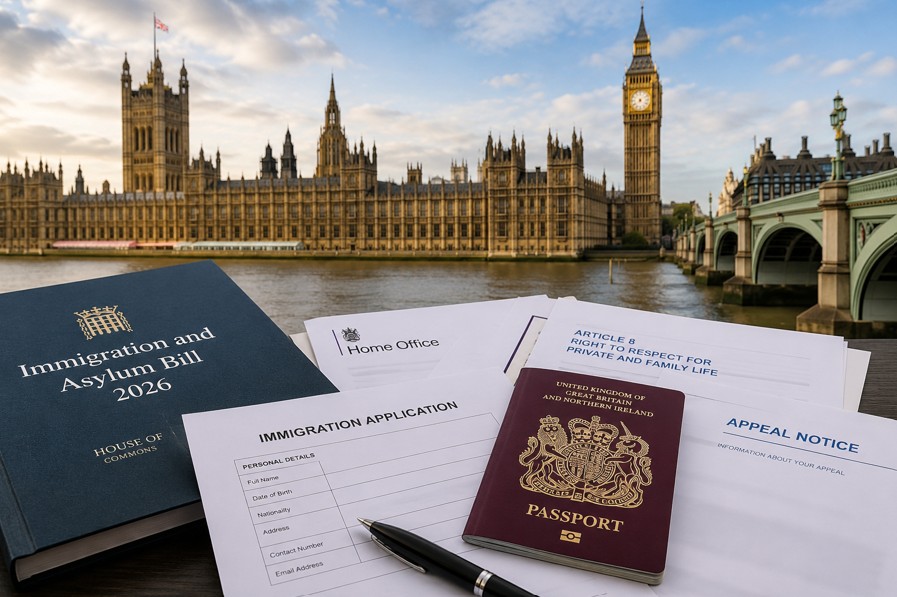
The Immigration and Asylum Bill 2026 could significantly affect the way immigration, asylum, human rights, deportation and modern slavery cases are handled in the UK. The Bill has not yet become law, and its final wording may change as it passes through Parliament. However, it is important because it signals a clear direction of travel: tighter rules on late evidence, a new immigration appeals structure, a narrower statutory approach to Article 8 family and private life claims, changes to asylum support, and tougher credibility and disqualification provisions in modern slavery cases. OTS Solicitors' immigration solicitors advise individuals, families, businesses and vulnerable applicants on their options under the current Immigration Rules and how proposed reform may affect their position.
For people who may already be eligible to apply, or who are close to eligibility, the practical message is not to panic, but also not to delay unnecessarily. Past immigration reforms show that waiting can sometimes mean facing higher thresholds, fewer routes, stricter evidence requirements or less generous transitional arrangements. A rushed or weak application is not sensible, but where a person has a strong route now, timing can be an important part of immigration strategy.
This article explains what the Bill may do, why it matters, and why applicants should review their position before assuming that today's options will remain available in the same form in future.
What has been published?
The Immigration and Asylum Bill 2026 was introduced in the House of Commons on 30 June 2026. The Bill is described as making provision about immigration, asylum and modern slavery. It is currently a Bill, not an Act. That distinction matters: the proposals are not all in force and the Bill may be amended before it becomes law.
However, applicants should not ignore the Bill simply because it is not yet law. Immigration reform often affects decision-making culture before every detail is implemented. It can also create uncertainty for people who have delayed making applications, gathering evidence or obtaining advice.
At OTS Solicitors, we are already seeing clients ask whether they should apply now for leave to remain, settlement, British citizenship, human rights protection or asylum-related advice before the rules become more restrictive. The correct answer depends on the facts, but the question is a sensible one.
Key areas of the Immigration and Asylum Bill 2026
The following table summarises the main areas that applicants and families should watch closely.
| Area | What may change | Why applicants should care |
| Immigration appeals | A new Independent Immigration Appeals Authority would take over key immigration, asylum, human rights, bail and deprivation appeals. | Appeal procedure, timing, evidence handling and case progression may change. |
| Claim notices and late evidence | People liable to removal or deportation may be required to set out all grounds and evidence by a fixed deadline. | Late evidence may carry credibility consequences, making early preparation more important. |
| Article 8 family and private life | The Bill proposes a narrower statutory approach to family life and public interest factors. | Human rights applications based on family or private life may become harder in some cases. |
| Asylum and protection | The Bill includes powers connected to protection status and protection claims. | Applicants should understand current options and avoid delay where evidence is already available. |
| Asylum support | Some recipients of asylum support may be required to contribute towards costs, subject to safeguards. | Financial and support issues may become more complicated for some asylum seekers. |
| Modern slavery | The Bill includes stricter credibility, disqualification and late claim provisions. | Victims or potential victims may need earlier, better-evidenced advice. |
A new appeals body: why procedure matters
One of the most significant proposals is the creation of the Independent Immigration Appeals Authority, known as the IIAA. This new statutory body would take over many of the immigration and asylum appeal functions currently handled by the First-tier Tribunal. The Bill indicates that the IIAA would deal with protection and human rights appeals, certain immigration bail applications, deprivation of citizenship appeals and some EEA or EU exit-related appeal rights.
For applicants, the important issue is not only the name of the appeal body. The concern is how quickly cases are progressed, how evidence is managed, what procedure rules apply, and how the new system treats late material. Appeals are often evidence-heavy. A person may rely on country evidence, medical material, family life evidence, expert evidence, witness statements, documents from overseas or records of Home Office correspondence.
If the procedural environment becomes more deadline-driven, applicants who wait until refusal or removal action before preparing their case may be at a disadvantage. That is why early legal advice can be important, even before an application is refused.
Claim notices and late evidence: the risk of waiting
The Bill proposes a new claim notice regime. In broad terms, the Secretary of State or an immigration officer would be able to require a person who is liable to removal or deportation to provide all grounds for remaining in the UK and all supporting evidence by a specified deadline. Where information is provided late, the person may need to explain the delay, and there may be credibility consequences.
This is one of the most commercially and practically important parts of the Bill for applicants. Many people delay taking immigration advice because they hope the matter will resolve itself, because they are worried about costs, or because they do not understand the importance of evidence. Under a more formal claim notice process, delay could become more damaging.
Examples of evidence that may need to be gathered early include proof of residence, family relationships, children's schooling, medical conditions, care responsibilities, risk on return, employment history, financial independence, community ties and correspondence with the Home Office. These records are often easier to collect before a deadline is imposed.
Article 8 family and private life claims may become harder
The Bill proposes substantial changes to the way Article 8 family and private life claims are assessed in immigration cases. In particular, it seeks to define family life more tightly, with a focus on what the Bill describes as a core cohabiting family. Adult-to-adult family life may be harder to establish unless there is a spouse or partner-type relationship, or dependency going beyond normal emotional ties.
The Bill also proposes stricter public interest factors, including financial independence, good character, cooperation with immigration authorities and absence of convictions. It also strengthens the idea that less weight should be given to family or private life developed while a person's status was unlawful, precarious or obtained by deception.
For families, this could be very significant. Human rights cases are often fact-sensitive. A person may rely on a British or settled partner, children in the UK, care responsibilities, long residence, medical needs or private life built over many years. If the statutory test becomes narrower, applicants may need stronger evidence and more careful legal representations.
Anyone who believes they may have a family or private life route should not assume that the same arguments will be assessed in the same way in future. Our asylum and human rights solicitors can advise on evidence, timing and whether an application should be made under the rules as they stand now.
Asylum, protection and support proposals
The Bill includes provisions connected to protection status, protection claims and asylum support. It gives the Secretary of State regulation-making powers in relation to protection status and protection claims, and it also includes powers to require some recipients of asylum support to contribute towards the cost of support, subject to safeguards.
For asylum seekers, the practical impact will depend on the final wording of the legislation and later regulations. However, the direction of travel is clear: the Government is seeking more control over status, support and the way claims are processed. Applicants should therefore be careful about delay, incomplete evidence and inconsistent accounts.
This is especially important where a person has experienced trauma, exploitation, trafficking, persecution or serious harm. Evidence may take time to obtain. Medical reports, country evidence, witness statements and documents from abroad cannot always be produced at short notice.
Modern slavery and trafficking: credibility and timing
The Bill also proposes changes to modern slavery and trafficking provisions. These include stronger rules on credibility, disqualification and late claims, as well as changes to the recovery period and the support framework.
From a legal strategy perspective, the central concern is timing. Victims of trafficking or exploitation may delay disclosure for understandable reasons, including trauma, fear, control by others, shame, lack of trust, or not realising that what happened to them may amount to exploitation. A system that places greater weight on delay and inconsistency may make properly prepared evidence even more important.
Applicants and support organisations should avoid leaving disclosure, evidence gathering and advice until enforcement action is imminent. A late claim may still be genuine, but it may require careful explanation.
Why applicants should not assume future rules will be easier
It is common for applicants to ask whether they should wait. Sometimes waiting is sensible: a person may need to build eligibility, gather better evidence or avoid submitting an application before they meet the requirements. However, waiting without legal advice can be risky.
Recent immigration history provides useful examples. The financial requirement for many partner visa applicants increased from £18,600 to £29,000. Skilled Worker salary and skill requirements have tightened. Some routes have seen restrictions on dependants. In each case, people who delayed sometimes found that the rule they expected to rely on had changed, or that new applicants faced a harder test than those already protected by transitional arrangements.
The point is not that every person should apply immediately. The point is that eligibility should be reviewed early. If a person already qualifies, or is close to qualifying, there may be a strategic advantage in taking advice before further reforms come into force.
Who should review their immigration position now?
The Bill is most obviously relevant to people with asylum, human rights, deportation, removal or trafficking issues. However, its wider message should also be noted by many immigration clients who want to secure their position in the UK.
- People with a pending asylum claim or a possible fresh claim.
- Applicants relying on Article 8 family or private life arguments.
- People facing removal, deportation or immigration enforcement action.
- Victims or potential victims of trafficking or modern slavery.
- People with long residence in the UK but no secure status.
- Families with British, settled or long-resident children.
- People who may be eligible for further leave, settlement or British citizenship.
- Applicants who have delayed because they were unsure which route applied.
For these clients, the safest approach is to identify the current route, assess whether the requirements are met, and decide whether an application should be made before the legal landscape changes further.
Practical steps to take before the Bill progresses
Applicants should avoid rushing into an application simply because a Bill has been introduced. A weak or premature application can still be refused. However, sensible preparation now can protect future options.
- Check whether you currently have a valid immigration route or possible application.
- Calculate any relevant residence period for leave, settlement or nationality.
- Gather evidence of family life, private life, residence, work, study, children, care responsibilities and medical issues.
- Keep copies of Home Office letters, immigration decisions, appeal papers and biometric records.
- Take advice before a visa expires or before enforcement action becomes urgent.
- Do not ignore a Home Office request, claim notice, interview letter or removal communication.
- If evidence is late, keep records explaining why it could not be provided earlier.
OTS Solicitors' view
The Immigration and Asylum Bill 2026 is not yet law, but it is an important warning sign. The Bill suggests a system that may become more deadline-driven, more evidence-sensitive and less forgiving of late claims or poorly prepared human rights arguments.
In our view, applicants should treat timing as part of legal strategy. If there is a strong application available now, it may be sensible to explore it rather than waiting for more restrictive rules. Equally, applicants should not make rushed applications without checking eligibility, evidence and risk.
The best position is usually to act early enough to make an informed choice. That means understanding the current rules, identifying the evidence needed and taking advice before deadlines, expiry dates or enforcement action narrow the available options.
FAQs about the Immigration and Asylum Bill 2026
Has the Immigration and Asylum Bill 2026 changed the law?
No. The Bill has been introduced to Parliament, but it is not yet law. The final version may change before it becomes an Act. Current immigration rules and procedures continue to apply unless and until the law is changed.
Should I apply before the Bill becomes law?
That depends on your circumstances. If you are already eligible for leave, settlement, citizenship or a human rights application, it is sensible to take advice now. Waiting may be risky if future rules become stricter, but a weak or premature application should be avoided.
Will Article 8 family life claims become harder?
The Bill proposes a narrower statutory approach to family and private life claims. If enacted, some applicants may need stronger evidence to show that Article 8 is engaged and that removal or refusal would be disproportionate.
What is a claim notice?
A claim notice would require a person who is liable to removal or deportation to set out all reasons for staying in the UK and provide supporting evidence by a deadline. Late evidence may need to be explained and could affect credibility.
Could the Bill affect asylum seekers?
Yes. The Bill contains proposals on protection status, asylum support and the way certain claims and evidence may be handled. The impact will depend on the final Act and later regulations.
Can OTS Solicitors advise before the law changes?
Yes. OTS Solicitors can advise on the current law, the strength of a possible application, evidence preparation and the practical risks of waiting.
Contact OTS Solicitors
For advice on immigration, asylum, human rights, settlement or British citizenship applications, call London-based OTS Solicitors on 0203 959 9123 or contact us. Our immigration solicitors can review your position, advise on current options and help you decide whether action should be taken before further reforms come into force.